Bergmann Group: Difference between revisions
mNo edit summary |
mNo edit summary |
||
| Line 8: | Line 8: | ||
}} | }} | ||
The [[Bergmann Group]] was | The [[Bergmann Group]] was a firm with a pioneering role in subterranean construction. They introduced numerous improvements in techniques for reinforcing concrete and had a major impact in changing how underground works projects were done. Most engineers to modern time still use the techniques and knowledge they developed. | ||
__FORCETOC__ | __FORCETOC__ | ||
| Line 15: | Line 15: | ||
====Founding==== | ====Founding==== | ||
[[Eric Kleinmann]], a German, was a respected building engineer who inherited one of the largest construction companies of Western Europe from his father, Edward Kleinmann. He was considered one of the greatest entrepreneurs of his generation in his heyday. His company was responsible for the development of steel-titanium textile-reinforced concrete. | |||
[[Xeander Berg]], a Belgian, was a friend of Kleinmann's and co-founder of the Bergmann Group. Very little is known of his life prior to the the establishment of the Group. Prior to joining up with Eric, he had a small research and development research facility in Belgium that focused on mining engineering. | |||
The two would meet at the International Exposition in Brussels where they found they shared the same ideas about construction and architecture. From that chance meeting the Bergmann Group was born. | |||
====World War II==== | ====World War II==== | ||
For many years | For many years the Bergmann Group was one of the world's leading firms in the realm of underground construction. Things changed dramatically after the onset of the Great Depression, however, with Germany and the rest of Europe becoming increasingly unstable both politically and socially. Eric Kleinmann would move his company to Switzerland shortly before the outbreak of World War 2, and Berg joined him in 1940, sometime after the collapse of the Belgian military in the face of the German invasion. There, they continued their work, carrying out various projects for the Swiss government and gaining extensive experience in tunnel and bunker construction. | ||
After the war's end, the Bergmann Group would gradually expand its business throughout the rest of Europe. Their first major post-war project was in the city of [[Stalburg]]. Having suffered greatly under prolonged German bombing, the city's government directed that the city be rebuilt from the ground up, starting with the fundamentals. The tunnels constructed by Bergmann would be a critical part of this effort. | |||
The reconstruction of Stalburg was the result of collaboration between three major firms: [[Stalburg Steel]], [[Hammer Valley Hydro]], and the Bergmann Group. In the process, the Bergmann Group was given leeway by the city council to build innovative structures for the city. One such idea was to do put the rivers around the city to better use. As a result, Hammer Valley Hydro built two hydroelectric power plants to provide clean electricity to the city: the [[Puzzle: Hammer Valley Dam|Hammer Valley Dam]] and the [[Two Gorges Dam]]. The Bergmann Group also had the task of building the main tunnels for the underground power plants. With their knowledge of bunker construction from their time in Switzerland, the Group was well-suited to the task. | |||
In the same period, [[Xeander Berg]] was working on several innovations, made possible by a generous budget being given to the innovations department by [[Eric Kleinmann]]. One of these innovations was textile-reinforced concrete: a mix of steel and titanium, which was used in the construction of the main tunnels of the city underground. | |||
====Bankruptcy==== | |||
Much mystery surrounds the events which led to the end of the Bergmann Group. First of these was the disappearance of [[Xeander Berg]]. In his last classified reports of [[Timeline of Events|1960]] Berg spoke of a new innovation that would "change the building world forever". Shortly after, however, he disappeared, and he was never heard from again | |||
While Berg's disappearance was a major blow for the company, the event with the biggest impact was the payback of the projects. The innovations team spent almost all of the Group's funds in their development and the company gained little in return for their projects. | |||
The company invested heavily | While Berg's disappearance was a major blow for the company, the bigger hit came from their gradually declining financial situation. The company had invested heavily in its innovation department with little to show for it. Simultaneously, the firm's public construction projects were not proving to be as profitable as had been hoped. When making the deals for these projects, the Group had taken the public interest into account as well, which had a decisive impact. | ||
In the end, many shareholders didn't believe in Bergmann anymore | In the end, many shareholders simply didn't believe in Bergmann anymore and forced Eric Kleinmann to sell his company to the [[Walter Corporation]]. In [[Timeline of Events|1980]], the Bergmann Group was declared officially bankrupt. | ||
Prior to the | Prior to the bankruptcy, the Bergmann Group had four active operations in and around Stalburg including Freshwater Tunnel Number 3 and the [[Cistern | cistern]], as well as several projects in West Germany. All of these had been causing the company numerous problems, including flagging funding, poor construction management and hazardous working conditions. | ||
Despite the firm's bankruptcy and closure, almost every large city in the world has seen construction within it that used the techniques and materials innovated by the Bergmann Group. | |||
==Gallery== | ==Gallery== | ||
| Line 57: | Line 57: | ||
==Trivia== | ==Trivia== | ||
Robin was an employee | |||
* [[Robin]] was an employee of the [[Bergmann Group]], usually considered a nuisance by his colleagues due to his habit of working while drunk and breaking things. | |||
Revision as of 22:58, 6 January 2025
 | |
| General | |
|---|---|
| Company | Bergmann Group |
| Motto | "The FOUNDATION Of Tomorrow !" |
| Status |
Defunct Subsidary of Walter Corporation |
| Industry | Construction |
| Key People |
Eric Kleinmann (deceased) Founder, owner Xeander Berg (deceased) Co-founder |
The Bergmann Group was a firm with a pioneering role in subterranean construction. They introduced numerous improvements in techniques for reinforcing concrete and had a major impact in changing how underground works projects were done. Most engineers to modern time still use the techniques and knowledge they developed.
History
Founding
Eric Kleinmann, a German, was a respected building engineer who inherited one of the largest construction companies of Western Europe from his father, Edward Kleinmann. He was considered one of the greatest entrepreneurs of his generation in his heyday. His company was responsible for the development of steel-titanium textile-reinforced concrete.
Xeander Berg, a Belgian, was a friend of Kleinmann's and co-founder of the Bergmann Group. Very little is known of his life prior to the the establishment of the Group. Prior to joining up with Eric, he had a small research and development research facility in Belgium that focused on mining engineering.
The two would meet at the International Exposition in Brussels where they found they shared the same ideas about construction and architecture. From that chance meeting the Bergmann Group was born.
World War II
For many years the Bergmann Group was one of the world's leading firms in the realm of underground construction. Things changed dramatically after the onset of the Great Depression, however, with Germany and the rest of Europe becoming increasingly unstable both politically and socially. Eric Kleinmann would move his company to Switzerland shortly before the outbreak of World War 2, and Berg joined him in 1940, sometime after the collapse of the Belgian military in the face of the German invasion. There, they continued their work, carrying out various projects for the Swiss government and gaining extensive experience in tunnel and bunker construction.
After the war's end, the Bergmann Group would gradually expand its business throughout the rest of Europe. Their first major post-war project was in the city of Stalburg. Having suffered greatly under prolonged German bombing, the city's government directed that the city be rebuilt from the ground up, starting with the fundamentals. The tunnels constructed by Bergmann would be a critical part of this effort.
The reconstruction of Stalburg was the result of collaboration between three major firms: Stalburg Steel, Hammer Valley Hydro, and the Bergmann Group. In the process, the Bergmann Group was given leeway by the city council to build innovative structures for the city. One such idea was to do put the rivers around the city to better use. As a result, Hammer Valley Hydro built two hydroelectric power plants to provide clean electricity to the city: the Hammer Valley Dam and the Two Gorges Dam. The Bergmann Group also had the task of building the main tunnels for the underground power plants. With their knowledge of bunker construction from their time in Switzerland, the Group was well-suited to the task.
In the same period, Xeander Berg was working on several innovations, made possible by a generous budget being given to the innovations department by Eric Kleinmann. One of these innovations was textile-reinforced concrete: a mix of steel and titanium, which was used in the construction of the main tunnels of the city underground.
Bankruptcy
Much mystery surrounds the events which led to the end of the Bergmann Group. First of these was the disappearance of Xeander Berg. In his last classified reports of 1960 Berg spoke of a new innovation that would "change the building world forever". Shortly after, however, he disappeared, and he was never heard from again
While Berg's disappearance was a major blow for the company, the event with the biggest impact was the payback of the projects. The innovations team spent almost all of the Group's funds in their development and the company gained little in return for their projects.
While Berg's disappearance was a major blow for the company, the bigger hit came from their gradually declining financial situation. The company had invested heavily in its innovation department with little to show for it. Simultaneously, the firm's public construction projects were not proving to be as profitable as had been hoped. When making the deals for these projects, the Group had taken the public interest into account as well, which had a decisive impact.
In the end, many shareholders simply didn't believe in Bergmann anymore and forced Eric Kleinmann to sell his company to the Walter Corporation. In 1980, the Bergmann Group was declared officially bankrupt.
Prior to the bankruptcy, the Bergmann Group had four active operations in and around Stalburg including Freshwater Tunnel Number 3 and the cistern, as well as several projects in West Germany. All of these had been causing the company numerous problems, including flagging funding, poor construction management and hazardous working conditions.
Despite the firm's bankruptcy and closure, almost every large city in the world has seen construction within it that used the techniques and materials innovated by the Bergmann Group.
Gallery
Documents
-
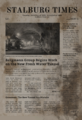 "Bergmann Group Begins Work on the Fresh New Water Tunnel"
 -
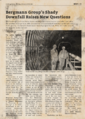 "Bergmann Group's Shady Downfall Raises New Questions"
 -
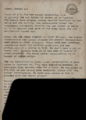 Tunnel Report A32
 -
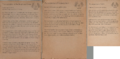 The acquisition of Bergmann Group
 -
 Cistern Raport A45


Trivia
- Robin was an employee of the Bergmann Group, usually considered a nuisance by his colleagues due to his habit of working while drunk and breaking things.